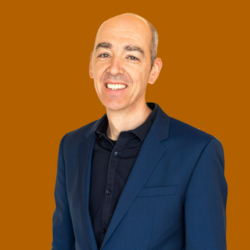
FSSC 22000 audits: een blik achter de schermen bij de norm zelf
Hoe kijkt de normeigenaar zelf naar FSSC 22000 audits? Angelie Jansen, Integrity Program Assessor bij FSSC 22000, controleert de certificerende instellingen en geeft in deze aflevering een zeldzame blik achter de schermen. We hebben het over audittijden en ISO 22003, de rol van GFSI, nieuwe thema’s zoals Food Loss & Waste, het FSSC Development Programma voor kleine bedrijven, en de vraag hoe AI het auditeren zal veranderen.
September 2025 – 41 min – Seizoen 2, aflevering 1
Wie is Angelie Jansen van FSSC 22000?
Angelie Jansen is Integrity Program Assessor voor FSSC 22000, de voedselveiligheidsnorm voor bedrijven actief in de voedselketen, hetgeen inhoudt dat zij de certificerende instellingen controleert of zij wel aan de schema-eisen voor certificerende instellingen voldoen.
Welke onderwerpen komen aan bod?
- Het verschil tussen second party audits en FSSC 22000 audits, de rol van ISO 22003, audittijden, en de relatie met GFSI
- Wie zit er juist achter FSSC 22000?
- Trends en uitdagingen in de food sector: welke evolutie ziet FSSC in de maturiteit van bedrijven?
- Evoluties binnen de FSSC norm: toevoeging van nieuwe thema’s zoals Food Loss & Waste, en de toekomst van auditing (o.a. via AI).
En zoveel meer!
Waarom zou ik luisteren?
Omdat je tijdens dit interview…
- Unieke insiderkennis krijgt van Angelie Jansen, een sleutelfiguur binnen FSSC 22000 met directe betrokkenheid bij integriteitscontroles wereldwijd.
- Praktische inzichten hoort over hoe audits écht werken, inclusief tips om er meer waarde uit te halen.
- Achter de schermen kijkt bij een standaardeigenaar en ontdekt hoe beslissingen over normen en eisen tot stand komen.
- Vooruitblik op trends krijgt over food safety, duurzaamheid en digitalisering (zoals AI in auditing) die de food sector gaan vormen.
Introduction
Alexander Platteeuw, A+ Quality:
My guest today is an authority in the world of food safety certification. I have known her since my time as an auditor at Vincotte. Vincotte was then a partner of Isacert and we got in touch during the auditor meetings.
She studied food technology at the University of Wageningen, after which she dove into the world of food and feed. First as a researcher, then as a QA manager at various companies. And as a scheme manager at Isacert, she made sure that auditors followed the rules of the standards.
And in 2017, she started her own business, Food Safety First. In this activity, she is not only connected to the Dutch Council for Accreditation, but above all, and that is of course the main reason why she is here with me today, she is connected to FSSC 22000, who she supports in the relevant and up-to-date maintenance of their food safety standards. Her role at FSSC 22000 is Integrity Program Assessor, which ensures that she checks the certifying institutions whether they comply with the scheme requirements for certifying institutions.
That's a whole bunch. Her region is Europe, Eastern Europe, Middle East and Africa.
This is the moment to get an insight into the internal kitchen of a standard owner. Welcome, Angelie Janssen.
Angelie Jansen, FSSC 22000:
Thank you. It's a great honour to be here.
An avalanche of audits
Alexander Platteeuw, A+ Quality:
I'm glad you're here. I will immediately start with the door in the house of companies in the food sector who have been complaining more and more lately that the avalanche of audits is not stopping. And even increasing with the years.
And on top of that, audit times are getting longer and longer. Whereby FSSC 22000 seems to be the leader. I don't know if that's the case, but I have to ask my customers, what is your reaction to that?
Angelie Jansen, FSSC 22000:
Yes, if you look at audit times, we are not the only scheme, but they are indeed getting longer and audits are more extensive. There are also more requirements from the outside. So if you look at GFSI, for example, the requirements 22003, where FSSC is linked to, then you see that the audit time is longer.
In some sectors that brings a little more than in others. But the requirements are increasing, so the time is getting longer. And it's not a small standard, FSSC 22000.
It is a global standard with the highest requirements, which are also tested regularly. So yes, I always say a bit of the Champions League of certification. And that's not for nothing.
That comes with an obligation to make an effort. There is a whole story behind it, and there are stakeholders behind it, who also exert their influence on it. But yes, it is what it is.
Who is FSSC 22000?
Alexander Platteeuw, A+ Quality:
We will come back to those stakeholders later. But maybe for our listeners and viewers, let's guess. Who is FSSC 22000?
Who has the shares?
Angelie Jansen, FSSC 22000:
FSSC 22000 is a foundation. So without a profit mark.
Alexander Platteeuw, A+ Quality:
A VZW, as we call it.
Angelie Jansen, FSSC 22000:
And because you don't have to create profits, you can also put in a little more of your own input. You are less dependent on what shareholders want. And FSSC's mission is to create a better world.
That is of course very broad. And in terms of food, that means that we say, yes, there must be safe food. There must be trust in our certificates.
So that's what FSSC is. And we say we also want to make an impact. So we also want to make sure that the knowledge we have, and possibly the money we earn, also benefits the creation of a better world.
So yes, we work a lot with UNIDO, the industry branch of the United Nations, to sponsor projects, for example. Yes, and that is FSSC. So a foundation without a profit mark, with an ideal, sustainable goal.
Alexander Platteeuw, A+ Quality:
That's a very different approach than the BRC and the IMS of this world.
Angelie Jansen, FSSC 22000:
Yes, they have a different organization, different stakeholders.
Frustration with repeated audits
Alexander Platteeuw, A+ Quality:
Yes, different underlying ideas. Now, back to the audits. I sometimes get questions from my clients, and I quote, how often can you audit the same subject?
Can you understand... You have also been in the field yourself. Can you understand that many QA managers today experience certain frustration due to those many audits?
Angelie Jansen, FSSC 22000:
Oh, absolutely. I myself have also been a QA manager. I have also been allowed to receive audits, and then be allowed to issue the certificates.
And now I see how it goes behind the scenes. Well, the hope was of course, that GFSI, the overarching global body, they have recognized as a goal, once certified, everywhere.
Alexander Platteeuw, A+ Quality:
Certified, once accepted, everywhere.
Angelie Jansen, FSSC 22000:
Yes, we still hope so, as far as the GFSI standards are concerned. So that you don't need both an FSEC and a BRC, or an IFS. And therefore, FSEC, but also the other standard owners, we are all committed to getting recognition in the industry and in retail.
That they also, indeed, that retail understands that they are on the same level. Well, that's quite a challenge.
Alexander Platteeuw, A+ Quality:
Twenty-seven years after the introduction of the standards. Unfortunately, yes.
Angelie Jansen, FSSC 22000:
Yes, and then of course there are also a lot of second-party audits. And yes, I also understand, if you have a company, that you would like to know something specific about your supplier. An audit is about the whole company, all products, all lines.
That you would like to say, well, that product on that line is mine. I want to know more about that. So we can't do it all, but we do try, also by influencing the industry and retail, to ensure broader acceptance.
You said twenty-five years.
Alexander Platteeuw, A+ Quality:
And there is still a long way to go. Yes, good. You don't order FSSC yet, twenty-five years.
But I do think that FSSC has already become a fairly renowned standard.
Angelie Jansen, FSSC 22000:
Yes, the largest GFSI standard worldwide.
Alexander Platteeuw, A+ Quality:
Are you the largest by now?
Angelie Jansen, FSSC 22000:
At least in terms of number of certificates.
Pressure on auditors
Alexander Platteeuw, A+ Quality:
What I also notice during audits, is that auditors, more than before, I think, have more fear of the hot breath in the neck of the standard owner. I explain my approach. They give a major non-conformity, of which you think during the audit, oh, is this a major non-conformity?
And you confront the auditor with it. And what he denies, gives feedback, yes, but yes, I give too few major non-conformities, according to, is it FSSC or according to another standard? Or if you read my report, you ask me, why didn't you give a major non-conformity for that?
That's a weird twist, I think. Not only me, but also the companies, I think. And yes, it is in the first place the auditor who is there, who assesses the situation.
So he or she is best placed to say, this is a minor or this is a major. Yes, I do feel a certain pressure on those people, their shoulders, from the standard owner. But I throw it in front of your feet.
Angelie Jansen, FSSC 22000:
Yes, well yes, that's a bit of a shame to hear, actually. Because that is of course not the intention. We have quite a strict program to qualify auditors.
Also to keep qualified. So for those who don't know, auditors have to do a lot of training, a lot of calibration with other auditors, just to make sure that there is a kind of audit, as much as possible. Auditors have their own knowledge, their own background.
So 100 percent, you never get the same audit. And that's not necessary, because that's also the power that you sometimes have. But there is no quota on non-conformity, what someone has to write.
Alexander Platteeuw, A+ Quality:
That would be weird, of course.
Angelie Jansen, FSSC 22000:
Because you find what you find, I always say. And that's what it is. What we have is very clear descriptions of when it is a minor non-conformity, when is it a major, and when does it really become a critical.
Going back to those definitions sometimes also provides something. For auditors, it is important that they write their NC clearly and clearly. That's why it still lacks something.
And you think, what does he mean? Because I think if you write it down like that, it's a major and not a minor. While if you get more information, you think, oh.
So with the eye of another person and look at it. Often, when you've been there, it's very clear. Also for the organization itself, it is very clear what is meant.
But if you read such a report, it's not always completely clear. So that's where it is sometimes. One more side note.
What we do look at at FSSC, for example, is we say, yes, aging lasts at least two days. There are more and more new schemes and requirements. So that an elderly person never writes a non-conformity, that's very unlikely.
Not that we say you have to at least one. Absolutely not. But yes, we do look at that, for example.
But no, we don't put any pressure on that. If it's unclear, we say, well, we have to train on that. Or certify the institution.
The integrity programme
Alexander Platteeuw, A+ Quality:
Good, that's also something I bring with me in my training as an intern auditor. Clarity for the reader. Then I say, guys, the one who reads your report, he wasn't there, so he also has to understand where you're at, in non-conformity.
Okay, good, clear. Can you tell us more, because you're an integrity assessor, can you tell us more about the integrity program of FSSC 22000? And what does that have to do with the certified companies?
Angelie Jansen, FSSC 22000:
Yes, this is the element that we say, the trust element. If a company has a certificate, it must also have trust. That must be a trust, that has a certain value.
And that monitoring is the task of the integrity department. And we mainly do that by keeping an eye on the certified institutions. So we look at how they qualify their auditors, whether that goes according to the rules.
Whether their report audit time meets the rules. So actually the control of the certified institutions.
Alexander Platteeuw, A+ Quality:
Could it be that you also put certified or non-certified people at the table during an audit at a company?
Angelie Jansen, FSSC 22000:
In exceptional cases, yes. Not as a rule, no. If there really are certain situations.
Alexander Platteeuw, A+ Quality:
Then there is a suspicion of...
Angelie Jansen, FSSC 22000:
Yes, when there are very serious reasons. When we say, well, something is really wrong there. Or we want to be an impartial party there.
For example, at a big recall. We have also been to that company to see how it is going. We also want first-hand information.
But as a rule, no, we don't do that. We also leave that to the accrediting institutions. Where we work very intensively together.
FSSC and GFSI
Alexander Platteeuw, A+ Quality:
Yes, okay. Because you just said the GFSI, the Global Food Safety Initiative, has already fallen. Can you give us an inside look into the relationship between a standard owner like FSEC and GFSI?
Angelie Jansen, FSSC 22000:
Yes.
Alexander Platteeuw, A+ Quality:
Are you the best friends?
Angelie Jansen, FSSC 22000:
It depends on who you ask. No, not always. But it's just work.
And sometimes there are opposite interests. But yes, the added value. FSEC is also checked again.
So everyone checks each other. GFSI audits once a year at our office.
Alexander Platteeuw, A+ Quality:
Okay.
Angelie Jansen, FSSC 22000:
To see if we want to.
Alexander Platteeuw, A+ Quality:
Okay, nice.
Angelie Jansen, FSSC 22000:
Yes, a lot of people don't know that. But yes, those are always quite exciting audits. Yes, furthermore, GFSI is the reason for a lot of changes in the scheme.
They set up new rules every year. And yes, they have to be implemented within a year. And sometimes the rules are very logical.
And sometimes we say, well, GFSI, that may not be so convenient. Well, if that's the case. There are also work groups, for example, for audit qualification.
For example, new scheme requirements. Well, all scheme owners are involved to ensure that there is a reasonable renewal.
Alexander Platteeuw, A+ Quality:
So it's a two-way communication. It's not that they dictate and say, this is how it will be.
Angelie Jansen, FSSC 22000:
Sometimes as well.
Alexander Platteeuw, A+ Quality:
Sometimes as well.
Angelie Jansen, FSSC 22000:
Yes, no, but of course there is always the possibility of dialogue.
Alexander Platteeuw, A+ Quality:
Fortunately. Fortunately, yes.
Angelie Jansen, FSSC 22000:
But yes, sometimes decisions are made that we say, well, we didn't have to. And sometimes we say, well, that's a good development.
Maturity of audited companies
Alexander Platteeuw, A+ Quality:
Do you, as a standard owner, and thus, as I just said, as the largest in the GFSI family, see an evolution in the maturity of the audited companies? I'll explain more closely. Do you see more or less non-conformities fall against the package management commitment?
I'm just asking because I sometimes hear from audit offices, yes, we see less good scores at audits. Compared to a number of years ago, I see that the level is declining. An auditor recently said to me, do you confirm that or do you say, no, that's a micro look, but if we look at the macro level, we see something else.
Angelie Jansen, FSSC 22000:
Well, if we look at FSCC, if we do analysis on our data, then we look worldwide.
Alexander Platteeuw, A+ Quality:
Of course.
Angelie Jansen, FSSC 22000:
Yes, we are a worldwide scheme. That it is declining, well, we don't really have that impression. What we do see, and maybe that is also the reason why auditors and others say that, is that we are increasingly making new requirements in the scheme.
And if we look a year later, what are the most common non-conformities? Yes, on the new requirements. On the new requirements.
And maybe that's why it doesn't seem to be decreasing. But if we really look at, for example, HACCP studies, traceability, internal audits, yes, it's not really declining. The only thing we all have to be aware of, I think, is that we don't let our attention be distracted by all those new requirements.
Of the core.
Alexander Platteeuw, A+ Quality:
The heart of the scheme. Yes, the HACCP study.
Angelie Jansen, FSSC 22000:
And if it doesn't go well, you can trace it quickly. Those are really the two core things. But no, no, no, certainly not if you look worldwide.
Yes, well, of course it is like that. Then people ask, yes, if you come to Russia or the Middle East, is it different there? But also there we see, if you have a GFSI, you are at the top of the market.
So yes, there is also a lot that we don't see yet. Worldwide. But yes, the higher performing companies, also in those countries, yes, they do have FSCC.
Alexander Platteeuw, A+ Quality:
Yes.
Angelie Jansen, FSSC 22000:
And there is also often strange money behind it. Multinationals.
Alexander Platteeuw, A+ Quality:
Yes.
Angelie Jansen, FSSC 22000:
No, not the impression that it is not a big business.
Alexander Platteeuw, A+ Quality:
No, I can't say that.
Angelie Jansen, FSSC 22000:
Fortunately not.
One common standard?
Alexander Platteeuw, A+ Quality:
Yes. The question of one million. Go ahead.
FSCC, we have already said, you started in 2009, a strong position in the food safety world. Because you just came from the ISO entry, the ISO 22000, embraced by B2B companies, by A-brand producers. And in the meantime, I don't know, can you put numbers on how many certificates there are currently?
About 30.000. 38.000 in the meantime. How does FSCC see itself as a competitor compared to BRC and IFS? And, the question of one million actually, will there ever be a common standard?
This is the question everyone is waiting for.
Angelie Jansen, FSSC 22000:
Yes, yes, yes. Well, we do see it in other sectors, aviation and so on. But the stakeholder group, the important groups behind those schemes, also regional, are different.
In America, for example, we still have SQF. That is also a comparable scheme. Yes, and everyone likes to stick to their own thing.
And their own stakeholders. Will there ever be a scheme? Well, not in the near future.
Alexander Platteeuw, A+ Quality:
I don't think so.
Angelie Jansen, FSSC 22000:
No, FSCC really sticks to the 17-21, the management system structure, in which companies have to do their own risk analysis more than we say, you have to do this three times a year. No, we say you have to do a risk analysis. So there is already a difference with other standards.
But also the important groups behind it, they still think it's too important that they have their own standards. Well, I said, but there is cooperation, of course. It's not like we...
Alexander Platteeuw, A+ Quality:
You say, we don't stand here with drawn-up people.
Angelie Jansen, FSSC 22000:
No, no, no. In the GFSI working group, for example, we all have a common interest. Keeping the audits on quality.
Keeping the auditor population on a level. So there are a lot of common interests. And also the appreciation of food safety certificates.
Yes, that is of utmost importance. That we all perform at a high level. And at this moment, I sometimes hear from companies, it's also nice to have a choice.
Because BRC suits us better than FSCC or vice versa. So no, no. No, your one millionth question, the answer is no.
Alexander Platteeuw, A+ Quality:
A few of my clients have to be disappointed.
Angelie Jansen, FSSC 22000:
Yes, yes, that's why. We focus more on the GFSI Doha.
Alexander Platteeuw, A+ Quality:
Yes.
Angelie Jansen, FSSC 22000:
One certified, accepted everywhere.
Culture, waste and social compliance
Alexander Platteeuw, A+ Quality:
In recent years, what has been added to the GFSI standards? Of course, food safety cultures. Not only in legislation, but also in the GFSI standards.
Food safety culture is one of the core principles to have a good food safety management system. And to maintain it and to keep it alive. Now, new things.
Okay, food safety culture. Everyone finds that logical. In version 6, behind the FSCC standard, there is also a demand around reducing waste.
And KPIs have to be defined on that. For food producers. A question from my clients is, how much does this still have to do with food safety?
FSCC stands for the Food Safety Standards Certification. Does that mean that we have to see FSCC evolve to a more comprehensive standard? Or do you say, no, that's an annex to food safety, but food safety remains our core?
How do we have to see that?
Angelie Jansen, FSSC 22000:
Food safety remains the core. I'll tell you more about that later. But on another standard that we recently launched.
But we say, food safety is very close to food availability. And also the creation of a better world, we certainly see a leading role there for us. I was surprised when I heard the numbers.
One third of all food that is produced worldwide, one third will be lost. It's just not eaten. And that's bizarre, if you think about how much that is.
And half of that is losses, so to speak. From the farmer to the factory, to the end product. And the other half, from the end product to the consumer.
So there's still the transport and retail, and the consumer itself, between one third. And we say, yes, food is becoming more scarce in that way. That is not sustainable.
And what happens when food is scarce? We get one of those other requirements, food fraud. And that can lead to food insecurity.
So it's the availability. Ensuring that with the resource we have, we eat up as much of our food as possible. And not get lost on the way.
Also to keep that availability. So that's behind it. So we ask certified companies, what kind of measures are they actually taking?
And sometimes it's, the product is not thrown away, but to the food bank. It can be that simple. It's also waste.
Or a nice example of a large vacuum company, which is going to measure how many losses we actually have in the waste of our tanks. Well, they thought it was possible, but they were shocked anyway. So we encourage that kind of initiative, by taking this into account in the scheme.
Alexander Platteeuw, A+ Quality:
That's an interesting one, because I didn't put the link to the food fraud through that, with the availability, but that's a good insight.
Angelie Jansen, FSSC 22000:
Yes, and especially if you look worldwide, because we are not only in Western Europe, but we are very large in Asia, for example, where this plays even more.
Alexander Platteeuw, A+ Quality:
I think so too. But well, calm down to hear that the food bank has remained the core of the matter.
Angelie Jansen, FSSC 22000:
Yes, well, you say, where are the schemes going? The piece of social responsibility. FSSC recently launched a new scheme, FSSC 24000.
That's about social compliance. There were already schemes, but not based on a management system. So companies that now have 14,000, 9,001, 22,000 We can join in seamlessly with a 24.000, not only in the food, but also a lot of interest from the textile industry.
Alexander Platteeuw, A+ Quality:
Okay.
Angelie Jansen, FSSC 22000:
Yes, yes. So that's very interesting. It's still small, but it's a very interesting development.
And that's actually also what we say, yes, we as a company think that we have to take our responsibility for a better world.
AI and the future of auditing
Alexander Platteeuw, A+ Quality:
Okay, that's nice. A question I already asked you, well-known Peter Daaire from Audit Bureau Van Sot in the previous podcast episode was, if I, Alexander, if I look at the term audit, then I personally think that we have to get rid of how audits are carried out today, are there full checklists from year to year of let's say 300 questions that need to be answered by an auditor? The one question with more added value than the other, I personally think that we need to go to a kind of hybrid system where companies make data available for an auditor or an audit institution and for an AI system then maybe, which is going to pick up certain trends, which is going to filter out incidents or near-misses and that combined of course also with a physical audit on the ground and in the factory, do you see a chance of hitting that, or?
Angelie Jansen, FSSC 22000:
I'm sure we're going in that direction, because what we're doing now, if we give such a thick stack of 10 cm CCP data from a whole year, then we'll get a few out of it. But how nice would it be if you could prompt an AI and say, give me the trends and what happened with that? Yes, then you have a much more complete picture, then you are not dependent on those few test samples.
I absolutely see that happening and yes, I'm not an AI expert, but if I see how fast it's going, then that's not very far away anymore. Yes, we are of course also thinking about it within FSC, how can you apply that and how do you get reliable data? That is of course, we live from data, we also transfer the data, of course.
I know that certifying institutions are already working on how we can do the control, the technical review, we call that, of the reports of the auditors, can that be automated? Because that's quite a lot of work. The next step is of course making audit reports and something else that I think is also not so far away, is that large multinationals come to FSC and say, give me insight into my customers.
That is already possible now, but customers do have to give permission now, so if ...
Alexander Platteeuw, A+ Quality:
Do you work quite manually now, or ...
Angelie Jansen, FSSC 22000:
Yes, but what happens then, is that for example a Unilever or a McDonald's, a Yum, has access to all the data of its suppliers. So then you say, AI gives me all the suppliers worldwide who deliver my raw material. Which allergens do they have in their factory and how long does it take to trace products?
Yes, that is not far away either, those data are there. Yes, that's fantastic. I think that's only AI that lives close by, where we can still imagine a little bit.
Alexander Platteeuw, A+ Quality:
Where the audit button is, so you also see evolving in the future ...
Angelie Jansen, FSSC 22000:
I don't think we'll ever get to that. No, I find it difficult to imagine that. I'm a food technologist, not an AI, but we do have AI specialists, for example in the Board of Stakeholders.
And yes, I recently had a long conversation with that lady, who is sketching a future for herself. And I said to her, I've never thought about that. Yes, that goes beyond your imagination.
But yes, if you really talk to experts, it goes much further than that.
Alexander Platteeuw, A+ Quality:
Could of course also offer a possible answer to the shortage of auditors, that you switch on a piece of technology to solve that problem? I'm just thinking about it.
Angelie Jansen, FSSC 22000:
That's not such a crazy thought, I think.
No scoring system
Alexander Platteeuw, A+ Quality:
Yes, okay, good. We certainly look forward to how that will evolve in the publications of FSSC. Now, FSSC consciously chooses, from the start, not to use a scoring system.
You're successful, or you're not. You have a ratio of deviations, big ratio or small ratio. Doesn't really matter.
BRC and IFS say completely the opposite. They stick to their higher level, A score, B score, and so on. Will FSSC continue to walk its own path?
Or what is your vision on that?
Angelie Jansen, FSSC 22000:
Yes, this is a very conscious choice. And sometimes there is also the discussion, do we have to do something with that? And the answer is always no.
We don't do that for certified companies. We say, well, you get an audit if there are shortcomings. Then it must be resolved immediately or there must be a correction and a good plan for it.
And then you are successful. And it remains a momentary audit. And that's it.
Sometimes you have a little more, sometimes a little less NCs. Depends on the test, depends on the auditor, depends on the weather. Well, you name it.
It remains a momentary audit. The audit is important, but also the follow-up after the audit. And that must also be done well.
That everything is back on track. And then it meets the requirements. So a certificate.
Alexander Platteeuw, A+ Quality:
Yes, I follow it a lot. Because I see a lot of nice things happening. The standard states that you can have a maximum of five miners to have an A score in BSC.
Then you have the auditors who give six, because they don't want to have an A score. But where does that sixth non-conformity go? Sometimes.
So then I'm a lot more of a fan of, ok, these are the facts, and you have so many miners this year, and so many the year after. Can you solve them in a safe way? Ok, I think that's much more important than saying, hey, we have an A score.
Right?
Angelie Jansen, FSSC 22000:
Yes, and then there is indeed the misery if the next time there is no A.
Alexander Platteeuw, A+ Quality:
Yes, yes, yes.
Angelie Jansen, FSSC 22000:
But that is also not pleasant for an auditor. Because they also know that there may be some discrepancy.
Alexander Platteeuw, A+ Quality:
Yes, yes, yes.
Angelie Jansen, FSSC 22000:
That is also often referred to as an argument. And you don't want an auditor to feel that kind of pressure. He just has to be able to judge honestly and without prejudice.
Without him knowing that such a company has great consequences. So we're definitely not going to do that.
A programme for smaller companies
Alexander Platteeuw, A+ Quality:
Ok, good. I notice in the latest changes of the GFSI norms in general, that one has to dig deeper and deeper to find what one can add to the norms. It's more about...
I don't want to be disrespectful, but it's more about points and commas than, let's say, 5 or 10 years ago with a version change. The basis remains the same, I think. But to your question, can we expect a big change in the near future?
Or will it be a further optimization of the existing?
Angelie Jansen, FSSC 22000:
Yes, I can't look into the head of GFSI. Sometimes they also come up with changes. But if I look at the trends within our scheme, well, I said, we're committed to a better world.
Well, that's where we started, with the requirement to make a scheme. Food Loss and Waste have all gone. We have a Social Compliance Scheme.
For the time being, we can move forward with that, I hope.
Alexander Platteeuw, A+ Quality:
Sorry to interrupt you, but that's a change that's coming from you, not from GFSI-driven...
Angelie Jansen, FSSC 22000:
No, the GFSI changes are indeed a little more detailed. Another big change is coming from ISO. For all ISO schemes, we also have to look at the risks of climate impact, for example.
It doesn't come from us either, but it does fit nicely into the street. So what impact do you get from the climate, but also the other way around. The climate can also influence your business, certainly in food and agriculture.
Yes, and furthermore, what GFSI is now also going to focus on, is to look... I always explain that we are quite a large, complex scheme. We often have the top of the market in many countries, but there are also a lot of companies below that now have local schemes, sometimes.
But for that we also have a slightly smaller version of RPCC, and we call it the Development Programme. So that goes more back to the heart of the standard. Make a safe product now, without all the management elements around it.
So management review, internal audits. That's for the next step. So first look at your PRPs, your staff, your processes.
Well, that basis... We had a scheme there, but it didn't quite work. It wasn't such a nice scheme.
There is now a really nice new scheme, where those requirements have really been brought back to the basis. So with that we are also going to get recognition from, for example, large multinationals, retailers. Because it is actually crazy that a company with three people has to have a GFSI standard.
Alexander Platteeuw, A+ Quality:
They are going to write a management review and they are with three people.
Angelie Jansen, FSSC 22000:
And they meet all the requirements. Not that, but it adds something. That's the question.
To do all that if you talk to the three of them every day, about everything. So we really hope to make a difference there. With a smaller standard.
Either as a starter, or for smaller companies to stay.
Alexander Platteeuw, A+ Quality:
May they continue with that development program forever?
Angelie Jansen, FSSC 22000:
If their customers agree with that.
Alexander Platteeuw, A+ Quality:
Yes, of course.
Angelie Jansen, FSSC 22000:
Yes, that's a bit customer-driven. But yes, the recognition... It doesn't have GFSI recognition yet.
Alexander Platteeuw, A+ Quality:
That's a shame.
Angelie Jansen, FSSC 22000:
BRC and IRVS also have a similar program. And that's a real shame. I think GFSI can make a difference with that.
Alexander Platteeuw, A+ Quality:
Someone from GFSA will have to get that in the podcast.
Angelie Jansen, FSSC 22000:
Then I'm a... Then I'm also a fan of batchmarking and recognition. Because there is a lot of need for that.
Because our standard is just too big for many companies.
Alexander Platteeuw, A+ Quality:
Yes, for very small companies. Can you guess what the criteria are for the development program? Because it's not for everyone, of course.
Angelie Jansen, FSSC 22000:
Well, in principle, everyone is allowed. There is a recommendation for that.
Alexander Platteeuw, A+ Quality:
You have to be a small company for the development program.
Angelie Jansen, FSSC 22000:
Or a starter.
Alexander Platteeuw, A+ Quality:
Yes.
Angelie Jansen, FSSC 22000:
Well, that's what it's written for. Really, when you have a certain size, you have to have a management system. To keep everything together.
There must be structures and processes. But especially for the smaller ones. Also the startups.
Not only in Africa or Asia. But also here. We have a lot of smaller companies here.
Which deliver local products to local supermarkets. Yes, it would be very nice for that. Yes.
And the other challenge in our sector is... Yes, keeping the number of auditors in check. What do the auditors do?
Yes, it is...
Alexander Platteeuw, A+ Quality:
It's a challenge of format.
Angelie Jansen, FSSC 22000:
That is a challenge that remains a challenge for very certifying companies. Or institutions and scheme owners. Yes, how do you keep the level high?
But also how do you keep enough auditors? Yes, that's not an easy one yet.
Alexander Platteeuw, A+ Quality:
No, no. I hear that from all sides. Yes, yes, yes.
Angelie Jansen, FSSC 22000:
Enough challenge.
Final advice
Alexander Platteeuw, A+ Quality:
Yes. Finally. What tips can you give to our QA manager, ODT listener?
Angelie Jansen, FSSC 22000:
Yes. I said earlier. An audit, you have to see it as an opportunity to improve.
And if there is a non-conformity. Take it seriously. Make sure you really look at why.
How could this happen? What is the root cause? Because we see it quite often.
That a problem starts small. Not solved well. And then it grows into something much bigger.
Which has led to a lot of recall. Sometimes to consequences for consumers. So you don't want that.
So even if you think it's just a small one. Take it seriously. Prevent it from getting bigger.
Smear it in the chalk. So that's what I want to tell all QA'ers. Don't think too lightly of it.
There is something that is not right in your system. Yes. And finally.
All 4,000 FCC auditors. They don't always have an easy role. It's a role.
You're always on your own. And it's great that you're well received by a company. That a company is open.
As an auditor, you're looking for conformity. So if you get a lot of open answers. It's great to be allowed to do your job.
And that also makes the audit much more valuable. So that's what I want to conclude with.
Alexander Platteeuw, A+ Quality:
Okay. Those are very wise words to conclude with. Anjelie.
I thought it was very cool to have you in my podcast. It was also a while ago that we saw each other. But very nice to see you again.
Thank you. And hopefully see you soon.