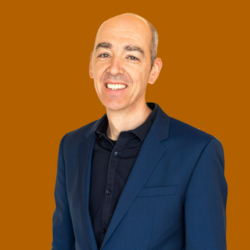
PPWR & duurzame verpakking: het Europese beleid uitgelegd door Hans Saveyn (JRC, Europese Commissie)
Hans Saveyn, Scientific Research Officer bij het Joint Research Centre (JRC) van de Europese Commissie in Sevilla, licht toe hoe wetenschap de basis legt voor Europese milieuwetgeving en wat de nieuwe PPWR concreet betekent voor verpakkingen in de voedingsketen. We hebben het over het Sevilla-proces, het spanningsveld tussen voedselveiligheid en meer recyclaat, de rol van AI en innovatie in recyclage, en het aandeel van de consument in het terugdringen van voedselverspilling en CO₂-uitstoot.
September 2025 – 28 min – Seizoen 2, aflevering 2
Wie is Hans Saveyn van de Europese Commissie?
- Hans Saveyn behaalde een diploma bio-ingenieur aan de Universiteit Gent. Na een korte periode in de chemische industrie vervolgde Hans zijn academische pad met een doctoraat in milieutechniek, gevolgd door een onderzoeksjaar aan de University of Delaware (VS). Terug in Gent werd hij benoemd tot hoofddocent, maar in 2010 verhuisde hij naar Sevilla, Spanje.
- Daar werkt hij vandaag als Scientific & Technical Project Officer bij de Europese Commissie, waar hij wetenschappelijke en technische expertise inzet voor Europees beleid rond duurzaamheid en milieu.
Welke onderwerpen komen aan bod?
-
 PPWR 2025 – Nieuwe EU-verpakkingswet, recyclagecriteria en impact op industrie.
-
 Evolutie van milieubeleid – Van afvalbeheer naar circulaire economie en duurzaamheid.
-
 Innovatie & AI – Toepassingen in recycling, materiaalontwerp en procesoptimalisatie.
-
 Balans tussen voedselveiligheid & duurzaamheid – Uitdagingen en oplossingen in verpakkingsmaterialen.
En zoveel meer!
Waarom zou ik luisteren?
-
Insiderblik van een EU-wetenschapper (JRC, Europese Commissie)
-
Alles over de PPWR 2025 en impact op verpakkingen
-
Hoe AI en innovatie recycling efficiënter maken
-
Praktische tips voor circulaire economie en duurzaamheid
-
Inspirerende toekomstvisie op milieubeleid in Europa
Introduction
Alexander Platteeuw, A+ Quality:
This time an interview in English. No panic to our Dutch speaking listeners, you can watch this interview on YouTube fully subtitled. My guest of today is someone I personally know for about 40 years.
We were still kids when our paths crossed in primary school in Ghent, Belgium. Over the years, we became friends with mutual interests as we both studied sciences and obtained our degree in bioengineering at the University of that same Ghent. After that, my guest started his academic career after a brief challenge in the chemical industry.
As he is much smarter than I am, I admit, he went for a PhD doctorate, which he obtained in environmental engineering, followed by a one-year period of scientific research at the American University of Delaware. Back at the University of Ghent in Belgium, he became associate professor. So this is the first time we have an actual professor at our table, welcome.
But then in 2010, he moved to Seville in Spain to continue his scientific career, where he now lives and he works as a scientific and technical project officer for the European Commission. What a curriculum. Welcome, Hans Savin.
What does the JRC do?
Alexander Platteeuw, A+ Quality:
Hans, please, first of all, explain your job.
After all, we don't have someone with such a job title here every day.
Hans Saveyn, European Commission:
Yes. So thanks very much for the very nice introduction. Indeed, after my academic career, I moved to the Joint Research Centre of the European Commission.
And the Joint Research Centre is what we call a director general. A director general, for people to understand, it's like a ministry. So we have many ministries at the European Commission, and one of them is the Joint Research Centre or abbreviated JRC.
At the JRC, what do we do? Basically, we do two types of things. We lay the scientific foundations for new policies to come.
For instance, if we know that in the future we might have to develop new policy, we want to measure in advance what could be the economic impact of such policy. But at the same time, we also do the really technical nitty gritty of certain policies. So when it comes to determining what should be the maximum limit of this or that in technical policy, that's also something that we do at the JRC.
So my function is also both of those. I do studies to prepare future policies or possible policies, but I also do the nitty gritty of actual policies, often what we call implementing legislation. So you might have already kind of a framework directive or framework legislation.
And then in the framework legislation, they often say, well, this will have to be developed into implementing act or delegated acts. And that's where we come into play. And we start developing then the technical details of that.
The circular economy
Alexander Platteeuw, A+ Quality:
And so you focus on environmental stuff, let's say.
Hans Saveyn, European Commission:
Yeah. The unit I work in, which is about 60 people, focusses on circular economy, which was in the past mainly related to waste. But nowadays, as we know, it's also about the circular use of resources.
And I have been working on things going from fertilisers to plastics.
Alexander Platteeuw, A+ Quality:
Very diverse. Does that also mean if there is an amendment published by Europe that's going through your hands as well? Because as time evolves, scientific knowledge shows that some things need to be adjusted.
Hans Saveyn, European Commission:
Exactly. A typical example is, for instance, on the fertilising product legislation where we have been working on. And there already the main legislation stipulated that the legislation should be updated according to the progress of scientific knowledge in the field.
And that's where we come into play as well. So we make some, we develop some legislation, but if after two years we see that there are new scientific insights, then we also propose amendments, as you say correctly.
How policies changed over time
Alexander Platteeuw, A+ Quality:
Yeah. So it's very clear the environment and more specifically a sustainable environment are key elements throughout your career and in your current job, of course. How did you see policies change in time on this matter?
Hans Saveyn, European Commission:
Yeah. Well, back in the days when I started, the focus was very much on waste. And waste, it was about getting rid of things and making sure that when you handle waste, you don't pollute the environment.
But it was still about getting rid of it. And then afterwards, this idea of sustainability started popping up more that it's not just about having an economy and then getting rid of the waste, but it's trying to have an economy that is more sustainable. And actually, one of the things that I've been seeing now more recently is, well, that they discovered that this environmental aspect and sustainability aspect can also even help our economy.
And that's what led to this current focus on what we call the circular economy. So where you don't see waste as something to get rid of, but as a new resource to feed in.
Alexander Platteeuw, A+ Quality:
As a raw material for something else.
Hans Saveyn, European Commission:
A raw material, it makes your chain more sustainable, more strong, and especially it gives us a bit of strategic autonomy compared to the rest of the world. Because as you know, we live in a very volatile world these days.
A breakthrough that excites him
Alexander Platteeuw, A+ Quality:
Correct. So what's one recent breakthrough in environmental science that excites you the most?
Hans Saveyn, European Commission:
Well, of course, I could be saying the stereotype of the AI, artificial intelligence. That's something that we have in many things. But what I really liked a lot from my general interest as an engineer and my background in environment is the breakthrough that we have seen in green electricity production, for instance.
So when we both graduated, people were still saying, oh, solar panels, that's a niche thing. Wind turbines, that's a niche thing. How can we ever produce a substantial part of our electricity with that?
And nowadays, you see that this is actually the cheapest way of producing electricity. Exactly. And now with the batteries coming up as well, it might be even the cheapest way to store our electricity.
And I would hope to see something similar when it comes to waste and resources that one day people will say, rather than going for virgin raw materials, the cheapest way is to reuse, is to reutilise our resources and so on.
Answering the bureaucracy critique
Alexander Platteeuw, A+ Quality:
The EU, your employer, is often criticised for being too bureaucratical, non-industry supportive, too theoretical. How do you personally feel about that, being an internal stakeholder? After all, it's your advice that will turn into this legislation.
Hans Saveyn, European Commission:
Yeah, no, I think I understand the criticism. I've seen it also myself in certain files, but I'm very happy to be at the place where I work. So I work at one of the joint research centres, which is located in Seville.
And we have in Seville, in Spain, and we have something that we call the Sevilla process. And it's something that was developed there because we had to do specific legislation on emissions for production centres. But that can also be, for instance, farms or mines nowadays as well.
And this involves actually to understand everything. This involves to understand what are the environmental concerns, but also what are the economic concerns. And therefore, already back at the end of the 90s, they started developing this process, which we call the Sevilla process, which really involves from the very start, all the stakeholders, relevant stakeholders.
So we have NGOs, we have the industry, we have the member state representatives, and they all come together. And what we try to do is to really work on data as well. So everybody shares data in a closed platform where that working group can see each other's data, and then you try to come up with solutions based on that data, having a common understanding of the data, and then saying, look, this is achievable, this is economically achievable, this is what everybody can live with, and then we can try to come up with consensus proposals.
And the advantage of this is that when then our proposals go to the colleagues in Brussels that really have to do the implementation and making it a legal text, that you could say it's like an oven ready proposal. And there will not be a lot of criticism anymore, because all the stakeholders have already been dealing with that. And you call that the Sevilla process, is that an official term?
It's an official term. It's even mentioned in the legislation. There is a decision on it, and there's even a YouTube video on it.
So for people who want to look into that, you can Google Sevilla process and you will get some more information.
Alexander Platteeuw, A+ Quality:
Which is then that this principle is then used throughout the whole of Europe at other locations, let's say, JRCs as well.
Hans Saveyn, European Commission:
Yes, yes. So we indeed, we are trying to promote that not only for the work that we do within Seville, but also within our colleagues' sites at the JRC. So we have different JRC sites all across Europe.
But also now in Brussels, we had a visit of Commissioner Roswell for the environment and she was also very excited about the Sevilla process, which can really help to make sure that there's a more common understanding between all stakeholders involved when drafting legislation. Okay, very good to hear.
The PPWR and packaging recycling
Alexander Platteeuw, A+ Quality:
You told me before that you are currently working on a project dealing with recycling of all kinds of packaging materials, such as plastics, paper, cardboard, etc. Which is, of course, one of the reasons I invited you here. Can you tell us a bit more about that?
Hans Saveyn, European Commission:
Yeah, so I think you might have heard about new packaging and packaging waste regulation. Of course. Which replaces the former packaging and packaging waste directive.
So what is important to understand under the new packaging and packaging waste regulation is that the focus will much more be on the circular use of packaging materials. If we come to think about it, for instance, in Europe, about 40% of all the plastics that we use and 50% of all the paper and cardboard that we use is used in packaging. And as you may know, that's a very short life that these materials are used once and then they're being disposed of.
So in the past, the packaging and packaging waste directive was focused on minimisation, on recovery, but recovery often involved energy recovery, which means basically burning it. But nowadays, it's about this circular uses, so reuse and recycling. And one of the core elements in the packaging and packaging waste regulation is that by 2030, all packaging that will be put on the EU market will have to be recyclable.
Now, what does that mean, recyclable? Exactly. So for that, there are already some provisions in what we call the PPWR, which is the abbreviation of the packaging and packaging waste regulation, which state a number of elements.
So you have to look at the quality of the recyclate, you have to look at the environmental and economic impact of the recycling process. But you also have to look, of course, at the design of the materials. How are they designed?
Are you using, for instance, just one single material, like one single plastic like PET, or are you using this kind of sandwiched materials with multi-layers, multi-materials, even sometimes. So this might make things more complicated. Then there's also the issue of the substances of concern.
And all this has to be then integrated in an overall recyclability performance grade assessment. So we have to give a score. We have to say, if we have this bottle for milk, what will be the score?
Will it be 72? Will it be 87? And so on.
And how do you calculate it? And if you allow me, I can explain a little bit more. So the way it works is that we actually address this from three different angles.
So first of all, there's a system that we call the traffic light system. The traffic light system is something that will say, we look at the design of the packaging. Does your bottle have these and these elements?
Is the printing done this way? Does the label look like this and that? Does it contain this and this?
So all these different elements are checked and you can look in tables, like what are my elements? And then you will see it's either green, yellow or red, hence the traffic light.
Alexander Platteeuw, A+ Quality:
Solely based on the design. Solely based on the design.
Hans Saveyn, European Commission:
And then overall, you will look and you will say, okay, my packaging, for instance, has 15 green elements and four yellow elements. If it has a red element, it will probably be out. But it can also be that your specific packaging has an element that you don't find yet in these traffic light tables.
So then we develop recycling protocols for that. So we testing protocols. So you will be able to follow a certain standardised recycling testing protocol and you can run your packaging through it, your new packaging and see if it's indeed recyclable or not.
Now this work, this is not something that I myself or my team is doing, but this is being done by CEN. CEN is the European Standardisation Body and they develop all kinds of norms at European level. What is the advantage of doing it that way?
The advantage is that CEN brings together all stakeholders from industry, recyclers, the value chain, they're all integrated. Even NGOs are involved in that. And they're also based on consensus.
On top of that, they have been working on that, especially for plastics already since three years. So there's a huge amount of knowledge and a huge amount of discussions that have gone into that. And they're drafting now their first proposals for plastic packaging.
And later in the year, they will have proposals for other types of packaging. So this is really industry based. But of course, we from the European Commission, we keep an eye on it.
We make sure that there is no certain vested interest that gets more power and industry is pulling it.
Alexander Platteeuw, A+ Quality:
Exactly.
Hans Saveyn, European Commission:
Yeah. So we make sure...
Alexander Platteeuw, A+ Quality:
But you talk in future terms, you say they will do this and they will do that. So at this very moment... Well, I cannot have access to this Traffic Light scoring system.
Hans Saveyn, European Commission:
No, you cannot have access to Traffic Light scoring system because only the people that work within the same committees have official access. But as I say, one set of norms will be published very soon after the summer. And once they have been published, everybody can buy them, basically.
Alexander Platteeuw, A+ Quality:
But it will be mandatory to use that system.
Hans Saveyn, European Commission:
And it will most likely be mandatory to use that system. And if that's the case, then of course, these norms will be taken over into our delegated act. So we will kind of copy paste, maybe with some adjustments, these elements in our European delegated acts, which will be publicly available, of course.
But until then, you can... Once these things are published after the summer, you can buy them. So that's the first big element that we have.
Then the second element that will be part of this recyclability performance grade assessment will be the so-called sustainability of the recycling operations. So we will look at how much energy goes into recycling these materials. You can think of it, for instance, an aluminium can will have a different profile than a plastic bottle or a cardboard box, for instance.
So they will have different energy performances. We have to integrate also other environmental aspects. The work on this has just started, so I cannot tell you yet how it will look like, but you can think of elements related to life cycle assessment, LCA, in a light form that will be integrated in that.
So that's the second element that will be done in-house at the JRC with people working in my team on that. And then there's the last point, which is the substances of concern. And the substances of concern refer both to substances that might affect the environment or the human health, but they can also be substances that affect the recycling process.
For instance, if they are present, all of a sudden they start clogging up the machines or then the final quality of the recycled material. So those three elements will be integrated together. The last point on the substances of concern, that work is being carried out by the people from the European Chemicals Agency, colleagues that are based in Finland, and they will also produce their results.
And then it will be up to us in the JRC to bring in these three elements together. So the sand traffic light tables, our own environmental and economic performance assessment and the substances of concern parts from the Chemicals Agency.
Impact on the food industry
Alexander Platteeuw, A+ Quality:
And these three together will need to help of course protecting the consumer, but will have of course an impact on the industry who is producing the packaging materials, who is using it to put a food product in it. I personally, when I talk with my customers, I have the opinion that the industry is not fully aware of the huge impact this will have on them. Do you agree on that?
Because I think there is something huge coming to them, a lot of work, investments, research, talking with their suppliers, going through the whole supply chain. Do you have any idea of that?
Hans Saveyn, European Commission:
Yeah, we are aware of that. When I was telling my story before, actually I didn't tell you the entire story. We also have two deadlines.
So the first deadline, as I said, is 2030, which means technically recyclable materials. And then the other deadline is 2035, which means recyclability at scale. Recyclability at scale will mean that you don't have to only develop a kind of packaging material that can be recycled, but also that it is being recycled.
So I think for your customers and for the food packaging industry and packaging industry in general, it will be important to try to bet on safe choices. I think that is the message I would like to say. Now, if you're thinking of developing a new packaging material or changing your packaging material because you already have a feeling that it might not meet these criteria of recyclability, try to look for options like mono material or other elements, for instance, that you know that are safe or that can be in the green column.
It's true what we said before, these things are not officially yet public. They will become soon publicly available. But I understand that the people that are represented in SEND, they're representing the industry organisations that can already provide general information.
On top of that, I mean, we are not reinventing the wheel. I think a lot of people that are working in the sector and that are packaging specialists, they know when something is very well recyclable and when something is not recyclable at all. It's perhaps more about this grey zone or what we would call the yellow zone here where we don't know yet.
Can it be acceptable or not? So, yeah, that would be my message. Speak to those that are in the know of the process and keep an eye on it soon when these traffic light tables are being published to see what you can do so that you're future proof.
Food contact and recycled content
Alexander Platteeuw, A+ Quality:
There will be, of course, the price aspect, of course, of the virgin materials versus the recyclables, which we already see today. But anyway, that's another discussion, I think. Anyway, when we focus on the food contact materials, there's this constant tension of having a food contact suitable material.
And on the other hand, from your point of view, using as much as possible recycled materials. What's your vision on that? How do you as a researcher balance out these two parameters?
Hans Saveyn, European Commission:
Yeah, I think that's a very good question. And it's also something that we are considering. As you may know, in the PPWR, there are a number of provisions on recycled content, specifically for plastics that say, for instance, for bottles made out of PET or bottles made out of other polymers or contact sensitive and non-contact different levels of recycled content requirements for the future.
Now, this might be easier said than done, as you may know, because right now the only real food contact plastic that can be recycled at scale into new food contact material is PET. That's the only one. There are some niche applications for other materials like HTPE bottles or something like that, but they're often constrained to specific, for instance, local circles where they collect milk bottles and so on.
So that's a challenge. And so when we look at, for instance, what I mentioned before, the economic and environmental performance of the recycling, we have to adapt. We cannot say, let's just look at what would be the standard mechanical recycling option of an HTPE bottle.
No, because that if we send an HTPE bottle through mechanical recycling, what will come out of it will not be contact sensitive, suitable material. So what's the next option then? Well, then we have to rely on chemical recycling.
You might have heard about chemical recycling. It's the new big wave of recycling where people have invested a lot of hope and money to produce materials that can achieve food contact qualities and actually, in general, virgin quality properties. Now, for that, we will then have to make sure that if we're specifically talking, for instance, about food contact, that we put our bar a bit actually lower.
So in terms of what are the emissions that we can accept? What is the environmental performance that we can accept? What are the losses that we can accept?
Because we know we will have to go through chemical recycling. That, of course, will not mean that we will accept whatever chemical recycling process. If you have something that only transforms two percent of the original material back into recyclate, then probably it will not be the best.
But we also see that there's a lot of new technology developments in chemical recycling, also physical recycling, where really good quality materials.
Alexander Platteeuw, A+ Quality:
You are working as well on this chemical recycling?
Hans Saveyn, European Commission:
Yeah, we have been following a bit the market because chemical recycling got a lot of attention because of actually these recycled content requirements as well. Then there's also the idea of, for instance, by 2050, how will our plastics industry look like? We will have to decarbonise our plastics industry.
That will mean that there will be a lot of bio-based materials, but there also will be a lot more recycling, not only mechanical recycling, but also chemical recycling. Then there's also the links between different industries, for instance, very interesting to see that if you look at textile recycling, there's a lot of PET, which we call polyester in textiles, that is very difficult to recycle. But through chemical recycling, you can recycle that and you can even bring that back, for instance, in the packaging sector and the food contact packaging.
So yeah, that's very interesting.
Biodegradable materials and consumer confusion
Alexander Platteeuw, A+ Quality:
Two industries working together in a sustainable way. Talking about these new materials, because you just mentioned them, how does the EU balance innovation in packaging materials such as biodegradable materials with strict food safety regulations? Do we need to educate the public more about the real meaning of what is biodegradable, full recyclable, etc.?
If you ask me, my answer would be yes, not only to the consumer, but also to the industry, the user, the food packer, these terms are being used and nobody really knows what they actually mean. What's your opinion on that?
Hans Saveyn, European Commission:
Yeah, well, I think it's indeed important for the packaging industry to keep on developing innovative materials. And if you look at the packaging waste regulation, there are actually provisions as well for innovative materials. So this is kind of a sandboxing option, let's say, where new materials that enter the market for about five years, they will be exempt from having these strict recyclability requirements because the focus should be first on developing good materials, sustainable materials that offer, for instance, advantages in terms of food packaging or other properties that we don't have until now.
So the PPWR allows this development of new materials. Then when it comes to the second part of your question, I fully agree that the consumer loses a bit the overview on all the different terms that are being used as biodegradable, biobased, then it's recyclable. Sometimes people put on the packaging 100% recyclable, but that doesn't mean that it contains any recycled content, but it's the marketing departments, they play with that.
Yeah, very innovative. Yeah. What I think is that it's actually up to us as regulators to make sure that this kind of misleading concepts cannot be used.
I don't think it should be the consumer who spends 50 minutes in the supermarket reading the whole label to understand, do I have now something sustainable? So we should make sure as a regulator that they can trust when they go to the supermarket that everything they buy basically is sustainable or is getting more and more sustainable with time. We have also the green claims policy now that came out, I think last year, that wants to make sure that these false green claims cannot be used anymore.
So I think it's really up to us as a regulator to make sure that the consumer can buy in confidence.
Working with regulators
Alexander Platteeuw, A+ Quality:
How can industry stakeholders from the packaging manufacturers to the food producers work more effectively together with regulators to ensure both safety and sustainability? I think you already mentioned part of the answer, but are there any other hints you can give?
Hans Saveyn, European Commission:
Yeah, well, as I mentioned, one of the elements that I really appreciate in this work is the work that is being done by the European Standardisation Organisation, where I could really see that you have these people from the whole value chain coming together, industry, but in the industry you have different industry players, of course, you have the recyclers, you have the packaging manufacturers, but you have also the brand owners.
So all these people, they're coming together and they're trying to come up with a consensus proposal, which is actually very similar to the Sevilla process that I mentioned before. So they're already doing their own Sevilla process. And I think this has been working very well because you could really see that these traffic light tables, they're fully built on consensus.
And whenever there is no consensus, people still have the option to basically prove their recyclability via this recyclability testing protocols. So it's not because it's not in the legislation, well, or in the future legislation, right now we're talking about standards, of course. It's not because in the legislation that you will be automatically out.
So you still have a way to prove that your material meets basically the ultimate goal of this recyclability. And I think that's a very admirable way of working. And I would encourage that also because those people are not only the people that know nowadays what is happening, but they also follow the progress in the field.
And actually what is interesting to know is that now when CEN will have their standards published after December, they will immediately start updating them to already adapt to the progress in the field, what is the new state of the art and so on. So that maybe in two years time, we can already say, okay, what in the past was not detectable, now we know that most of these things, for instance, can be detected and therefore recycled and so on.
The role of AI
Alexander Platteeuw, A+ Quality:
Which of course gives a challenge for the industry to keep up to date with all these changes, of course. That's always a challenge in any legislation anyhow. Now, coming back to what you mentioned at the beginning of this interview, you just briefly mentioned AI, which is the buzzword, of course, and it's part of every interview I do here in the podcast show, but what role do you see for AI and new technologies in environmental engineering and sustainability?
Hans Saveyn, European Commission:
Yeah, I think there's a big role for AI as in any industry. What I see, for instance, specifically on the discussion that we have here today on the packaging, I think AI will help to develop a lot of new materials that offer everything that we're looking for, sustainability, safety, food contact compatibility, and so on. So I think this can help us in developing just on the computers possible new materials that then can be developed in the industry.
But I also think that, for instance, when we talk about recycling, things like machine learning, optical detection, and so on, will help us in having a better separation of different materials with fewer losses so that the plastic is separated from the cardboard and plastic A is separated from plastic B. And in the end, you will have much purer plastics with a higher recovery rate as well. So that will help then in having recyclates of higher quality and probably at lower prices as well because a lot of recycling nowadays is still involving manual work, for instance.
And these machines, they will be less prone to errors there.
Getting consumers involved
Alexander Platteeuw, A+ Quality:
Yeah, very interesting. Last question. We briefly mentioned the consumer earlier on.
In your view, how do we get consumers more involved in sustainability efforts?
Hans Saveyn, European Commission:
Well, as I mentioned before, when it comes to the packaging, I don't see so much of a role for the consumer because I think it's for us, for the regulator. I think what the consumer can do is try to avoid food waste. I think that's actually more important that if you buy a piece of meat in a certain packaging with a conditioned atmosphere, that you don't only look at how is the packaging, what material is the packaging made of, but that you eat that piece of meat rather than throwing it away after a week because you forgot it in the fridge or you just bought too much because there was an offer three for two and in the end, you were hungry when you were buying it and therefore you bought much more than you can eat. I think that's still one of the biggest issues that we have in Europe.
It's the food waste. I think we're wasting more than 130 kilogramme per person on average in Europe of food per year. And this contributes to 4% of our greenhouse gas emissions, which is quite a lot.
Considerable. Especially avoidable. Avoidable by planning better, by making better choices and having a look in the fridge, having a look at what you have in your fruit basket and so on.
Alexander Platteeuw, A+ Quality:
Well, Hans, thank you very much.
Hans Saveyn, European Commission:
My pleasure, Alexander.
Alexander Platteeuw, A+ Quality:
Thanks for your fascinating insight into your work at the European Commission. I think we and most of our listeners don't have an idea of what people at the European Commission are doing. But thank you very much for this very helpful insight, especially in the PPWR, which will have an effect on all of us.
And I would say continue your efforts for a better, sustainable world and speak to you soon.
Hans Saveyn, European Commission:
Thank you very much, Alexander. I look forward indeed to working on this also with people like your clients and people like you. And if there's anything else you would need to know, you know where I live and where I work.